
Brick Legs: Why Your Legs Feel Like Bricks After the Bike—and What to Do About It

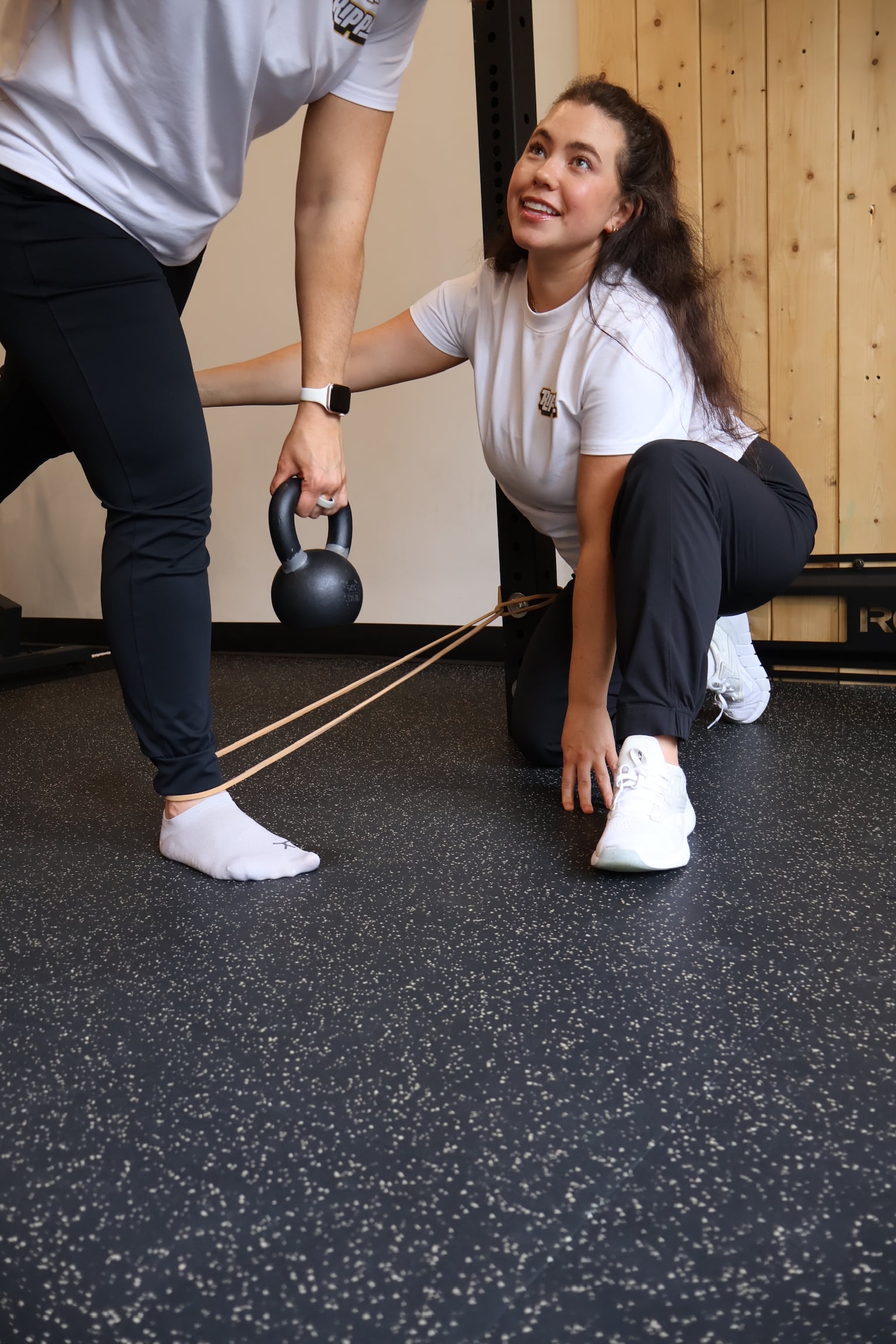
If you’ve ever stepped off the bike during a triathlon and thought, “Why do my legs suddenly feel
like concrete?... you’ve experienced what triathletes commonly call “brick legs” or the “T2
Effect”.
That heavy, awkward feeling during the first few minutes of the run is more than just a mental
hurdle. Research shows that running immediately after cycling can temporarily affect running
performance, movement patterns, and the way the legs are recruited.
Why does it happen?
Cycling and running place very different demands on your body. During cycling, your muscles
repeatedly produce force in a relatively constrained position. When you suddenly transition to
running, your body must switch to a weight-bearing activity that requires different coordination,
muscle recruitment, and force absorption.
Research has demonstrated changes in muscle activation after cycling, and studies have also
reported increases in energy demand of running immediately following a bike.
The result? Your first few minutes can feel awkward, heavy, or unusually difficult, even when
your cardiovascular system feels capable of running faster.
So, how can you overcome brick legs?
1. Practice running off the bike.
Your body needs to experience the transition, not just train cycling and running separately.
Incorporating “brick workouts” into your training gives you an opportunity to practice the
neuromuscular and pacing demands of running after cycling. The goal isn't to make every brick
workout hard. Even a short, easy run after a bike can help you become more comfortable with
the sensation.
2. Give yourself time to find your rhythm.
You don't need to hit your running pace the second you leave the bike. The first several minutes
can be treated as a transition period. Start controlled, focus on relaxed mechanics, and allow
your cadence and stride to settle before gradually moving toward your target effort.
This isn't “giving away” time, it is practicing the skill of transitioning efficiently!
3. Fuel the entire race - not just the run.
Fatigue isn't always a biomechanics problem. Insufficient carbohydrate or fluid intake during a
long race can contribute to declining performance and increased perceived effort. Adequate
carbohydrate and fluid intake should be practiced during training and individualized to the
athlete and event.
Tip! Remember race day isn’t trial day! Don't wait until you feel depleted to start fueling. It’s too
Late.
4. Don’t just train cardio.
Strength training can also be a valuable part of a triathlete's program. Appropriately
programmed resistance training can improve running performance and running economy in
endurance athletes.
The bottom line
Brick legs are normal, but they don't have to dictate your race.
Train the transition, develop your running-specific fitness, and make sure your fueling strategy is
tested before race day. Most importantly, don't panic when the first few minutes of your run feel
strange. Your body is adapting to a completely different movement demand.
The goal isn't to eliminate the sensation entirely. It's to teach your body how to move through it.
If your “brick legs” consistently turn into pain, significant weakness, cramping, or symptoms that
persist well beyond the transition, that's different from normal post-bike fatigue and may warrant
an individualized assessment by a skilled physical therapist.
Sources
1. Millet GP, Vleck VE. Physiological and biomechanical adaptations to the cycle to run
transition in Olympic triathlon: review and practical recommendations for training. British
Journal of Sports Medicine. 2000;34(5):384–390.
2. Weich C, et al. Discovering the sluggishness of triathlon running—using the attractor
method to quantify the impact of the bike-run transition. 2022.
3. Olcina G, et al. Effects of Cycling on Subsequent Running Performance, Stride Length,
and Muscle Oxygen Saturation in Triathletes. Sports. 2019;7(5):115.
4. Ramos-Campo DJ, et al. Comparative Effects of Pacing Strategies on Endurance
Performance: A Systematic Review and Network Meta-Analysis. Sports Medicine.
2026;56(3):725–738.
5. Rønnestad BR, et al. The Effect of Strength Training on Endurance Performance
Determinants in Middle- and Long-Distance Endurance Athletes: An Umbrella Review of
Systematic Reviews and Meta-Analysis. 2025.